 Patient Care Projects are student-led initiatives to further integrate direct healthcare practices within the Pharm.D. curriculum. Student members are able to lead various projects within the respective committees that involve activities such as education sessions, workshops, hosting guest speaker panels and much more. By participating in a committee, you will be given a chance to play a part in positively impacting healthcare in the community, acquire skills that will help you develop into a leader, and advance the pharmacy profession.

Asthma is a chronic (long-term) lung disease that affects the airways in the lungs. It affects people of all ages throughout the world. Asthma causes symptoms such as shortness of breath, wheezing, coughing, and chest tightness. Nonetheless, with proper disease management, patients can live a normal life. The Asthma Awareness Project focuses on educating the public through health fairs, clinics, and presentations on the signs and symptoms of the disease, the proper and effective way of using asthma medications and inhalers, common asthma triggers, and ways to identify if a patient’s asthma is under control. This education helps ensure that those suffering from the disease can live a better and healthier lifestyle. Members of the Asthma Awareness committee will have the opportunity to practice counseling skills, demonstrate proper use of various types of inhalers, and educate the public about the disease.

Operation Diabetes is a national APhA-ASP patient care project dedicated to battling the growing diabetes epidemic. Every year, Operation Diabetes coordinates diabetes screening services at health fairs as well as diabetes education for students and the local community. The goals of Operation Diabetes are to: increase overall awareness of diabetes, identify individuals in the community with previously undiagnosed diabetes, and educate those who are at risk. One of the ways Operation Diabetes has reached out to the community is by utilizing World Diabetes Day to educate individuals. This consistent involvement empowers the community with knowledge while creating awareness of the services offered by pharmacists and student pharmacists. We strive to host educational events to teach elementary students during their formative years about diabetes. Throughout the school year, it is our goal to learn and educate others in the advancement of treating and preventing diabetes, by having ambulatory care pharmacist guest speakers, journal clubs, and community outreach projects in non-hospital based settings. This project is an excellent way to give back to the community while gaining experiential and hands-on knowledge of a wealth of topics relating to diabetes.

The mission of Operation Heart’s Cholesterol Awareness is to strengthen the perception of cholesterol and contribute to healthier lifestyles through community outreach events such as health fairs and educational sessions. The Directors of Cholesterol Awareness attend health fairs to train and supervise student screeners, educate health fair participants about high cholesterol prevention, and collect screening values for future studies. Cholesterol Awareness aims to provide key counseling points that patients can apply to their everyday life to ensure better lifestyle modifications. Cholesterol Awareness offers opportunities for students to gain hands-on experiences and utilize their clinical knowledge outside of the classroom, and is ultimately a great way to provide an invaluable service to the community. As a committee member, you will assist the Directors during health fairs by managing the screenings and brainstorming ideas to improve the project. Through the committee, you will gain the necessary skills to perform a successful cholesterol screening and carry on the success of the project. Operation Heart is a patient care project that includes and oversees Project Hypertension, Smoking Cessation, Cholesterol Awareness, Healthy Living/Alternative Medicine, and Body Fat Analysis. This project seeks to raise awareness of heart health through screening and education in the community.
The goals of Operation Heart are to:
- Raise public awareness of CVD and its associated risk factors.
- Help patients identify and understand their risks for CVD.
- Provide patients with prevention strategies for reducing their risk of CVD and if necessary, refer them to their primary care provider.
- Educate patients already receiving pharmacotherapy for CVD.
- Promote the profession of pharmacy and the role of pharmacists in the prevention and management of CVD.

Body Fat Analysis is a screening project overseen by Operation Heart that offers participants body fat screenings and recommendations for lifestyle changes to lead a healthier lifestyle. Project Body Fat Analysis aims to assist participants in preventing potentially hazardous health complications. An increased body fat percentage is often overlooked, thus the possibility of having diseases resulting from this condition is very common. For this reason, detecting levels and making lifestyle changes early on is very important. During the 2022-2023 academic year, the directors of Body Fat Analysis will closely collaborate with other project directors to promote patient health education and the prevention of serious health complications associated with an above average body fat percentage. Director interns and committee members will have the opportunity to conduct screenings at health fairs, lead fellow students when performing their screenings, and lead the poster board education in various events. Members will also participate with directors to create any educational material relating to Body Fat Analysis.

The mission of Operation Heart’s Cholesterol Awareness is to strengthen the perception of cholesterol and contribute to healthier lifestyles through community outreach events. The Directors of Cholesterol Awareness attend health fairs to supervise student screeners and educate health fair participants about high cholesterol prevention. Cholesterol Awareness aims to provide practical and culturally sensitive counseling points on lifestyle modifications that a diverse range of patients can easily apply to their lives. Cholesterol Awareness offers opportunities for students to gain hands-on experience and utilize their clinical knowledge outside of the classroom through events such as project sessions on dyslipidemia, health fair training, and journal clubs. As a committee member, you will assist the directors during health fairs by managing the screenings, attending cholesterol awareness meetings, participating in journal club discussions, and brainstorming ideas to improve the project. Through the committee, you will gain the necessary skills to perform a successful cholesterol screening and carry on the success of the project.
The Healthy Living and Alternative Medicine patient care project aims to educate the community about the importance of non-pharmacological therapy. Lifestyle modifications, exercise, and dietary supplementation are among the many topics the project will contain. To carry out this project, a Healthy Living poster board will be utilized and presented at health fairs to educate patients about healthy lifestyles. Other activities include visiting elementary schools within the community and presenting on diet and exercise, collaborating with other APSA patient care projects to educate the community, and working with other organizations on campus. Members of the committee will be able to use their own prior knowledge to help educate patients, however, no prior knowledge of the topics is required as most of the information presented will be on the handouts and poster board.

Project Hypertension is a subcommittee of Operation Heart and our goal is to spread awareness about hypertension through education and community outreach. Most adults with hypertension are unaware that they have the condition, hence why it is often referred to as the “silent killer” . Therefore, we want to help participants understand what the risks of cardiovascular disease are, what their blood pressure number means, and how to prevent heart diseases. Project Hypertension oversees blood pressure screenings at health fairs in hopes to decrease the prevalence of cardiovascular diseases in the community. We offer skill labs and workshops in order to give student pharmacists the opportunity to practice their clinical skills. First year students are highly encouraged to join our committee to improve their knowledge in hypertension and learn about how our project can help participants manage their hypertension.

The Smoking Cessation initiative strives to educate and empower individuals to lead a smoke-free life. The goal of this project is to reduce barriers to smoking cessation interventions among vulnerable populations by providing education on health-related topics, nicotine replacement therapies, cessation management strategies, and support resources to enable individuals to live a healthier, smoke-free lifestyle. Being part of this initiative, student pharmacists will have the opportunity to take part in health education initiatives within the USC School of Pharmacy and community outreach events in the Los Angeles area.

Operation Substance Use Disorders – formerly known as GenerationRx–aims to combat the drug abuse epidemic through community outreach. Our mission is to improve health and wellness for individuals in our community that are particularly vulnerable–such as our younger generations or those facing homelessness. Through various community workshops available for aforementioned populations as well as students alike, Operation Substance Use Disorders strives to enhance the knowledge of our general public on topics such as harm reduction, medication safety, and de-stigmatizing substance use disorders–to name a few. Operation Substance Use Disorders also partners with Kaiser Permanente for their annual National Drug Take Back Day to provide community presentations regarding safe disposal of prescription drugs. Students will have opportunities to network with various medical professionals, polish their public speaking skills through presentations, and sharpen leadership skills by innovating new project ideas.

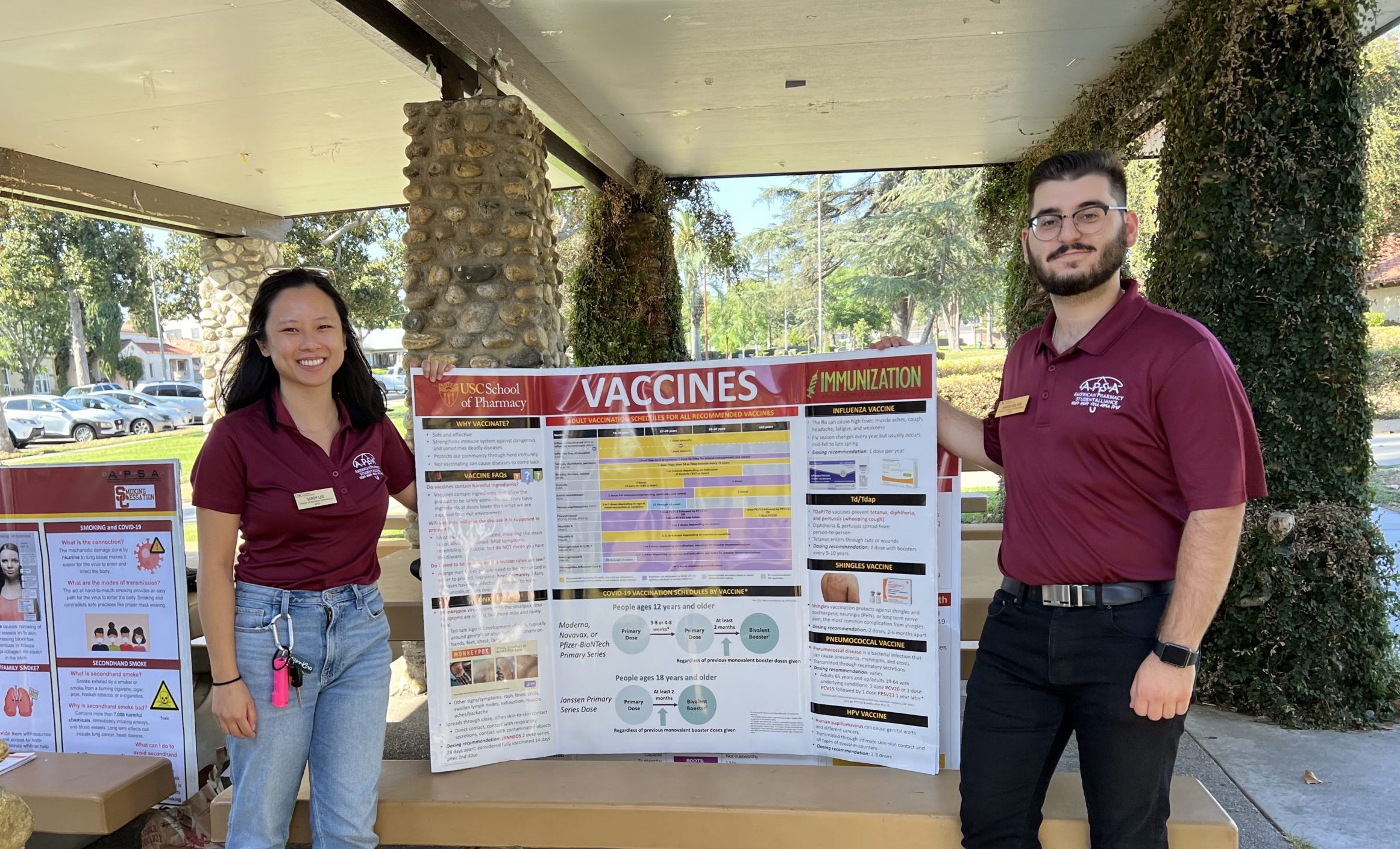
Operation Immunization is a national APhA-ASP patient care project committed to meeting the need for increased education and access to immunizations. APhA-ASP encourages participants to spread awareness about the importance of getting vaccinated and urge patients to stay up to date with their vaccinations. Through collaborations with community pharmacies, USC School of Pharmacy health fairs, and USC vaccination clinics, Operation Immunization provides student pharmacists the opportunity to take an active role in educating the Los Angeles community and increasing immunization rates. Operation Heart is a patient care project that includes and oversees Project Hypertension, Smoking Cessation, Cholesterol Awareness, Healthy Living/Alternative Medicine, and Body Fat Analysis. This project seeks to raise awareness of heart health through screening and education in the community.
Infectious diseases are one of the leading causes of death worldwide every year, particularly in low-income countries, especially in young children. Awareness is essential for prevention, early detection, and targeted therapy are key to ensuring effective treatment. However, one major barrier to effective treatment is the perceived stigma associated with infectious diseases. The Infectious Disease Awareness project seeks to educate people on highly-stigmatized disease states and on the importance of proper antibiotic use. A lack of awareness of diseases or knowledge of options for screening and treatment is a serious barrier to good health and it can often mean the difference between life and death. For instance, antibiotics are commonly used to treat infectious diseases, but the overuse and improper use of antibiotics promotes antibiotic resistance. Proper antibiotic use preserves the effectiveness of current antibiotics and extends their lifespans. The project mission is to help reduce the stigma associated with infectious diseases and educate future pharmacists on how they can optimize the use of antibiotics to effectively treat infections. We hope you consider choosing this committee as one of your options because infectious diseases are very common and affect the entire world.

The OTC/Medication Safety project was launched in 2015 as an official APhA-ASP National Patient Care Project. Members in the OTC/Medication Safety project will get the chance to educate students, their parents and caregivers, and their teachers on how to properly read and follow OTC and prescription medication directions. Members will present at secondary schools to cover how to read medication directions, how to safely store medications, and how to dispose of medications. Errors in these three factors result in over 10,000 ER visits yearly for children younger than 18 years old, so this project allows us to step in to prevent such visits. This year, these opportunities will be taking place in-person, unless otherwise specified. OTC/Med Safety also participates in health fairs, educating the public about symptoms that can be self-treated, such as heartburn or symptoms associated with the common cold. As a benefit, members of this committee will be able to actively apply the clinical knowledge gained from their Non-Prescription Therapies course into these presentations and health fairs.

The Pain Management Project at the USC School of Pharmacy is a patient care project that aims to educate the public about the proper use of prescription pain medication, over-the-counter pain medication, and lifestyle changes that patients can utilize to help alleviate both acute and chronic pain. The project’s main initiative is community outreach and education, executed throughout the year at health fairs, pain management clinic visits, site visits and presentations to underserved communities, and in-school talks and events. As part of this patient care project, you will get the opportunity to become involved in any or all of these various events, all while sharpening your clinical skill set and expanding your knowledge into the field of pain management for conditions such as headaches, neck pain, lower back pain, arthritis, neuropathies, and more.
As part of Project Pain Management, students will be able to:
- Educate the public about various aspects of pain management and present pain management topics to underserved communities.
- Shadow Dr. Melissa Durham at the USC Pain Center’s pain medication management clinic.
- Practice clinical and verbal skills through pain clinic patient case presentations.
- Help plan and organize speaker events and other events related to pain management or the opioid epidemic.

The Pediatric Health Initiative is a newly established patient care project that focuses on serving the pediatric patient population and equipping student pharmacists with the skills and experiences necessary to provide quality pediatric care. The goal of this project is to spread awareness about pediatric health and to ultimately advance the field of pediatric pharmacy. This project aims to present and provide pediatric health information at various events and clinics throughout the school year. However, no prior knowledge about this information is required to join. Student pharmacists will partake in planning various events for this patient care project such as a pediatric pharmacist panel, speaker series, community service events, pediatric patient case workshops, as well as a pediatric residency panel. Members will also have the opportunity to shadow pediatric pharmacists and gain experience within the field of pediatric pharmacy. Joining this project will be a rewarding experience where student pharmacists will be able to clinically learn and apply their knowledge to advance pediatric health in the community.

The Poison Prevention/FUENTE Project at the USC School of Pharmacy is a patient care project, which aims to educate on the importance of poison prevention. According to the National Capital Poison Center, approximately 2.1 million people are exposed to poisons. Although children younger than 6 years make up a disproportionate percentage of the cases, poisoning affects infants to seniors as well. With that regard, participants of this project will educate children and adults in the Los Angeles area on topics which include: identification of poisonous objects, proper disposal, the poison prevention help-line (1-800-222-1222), and appropriate storage of medications. By participating in community outreach events (e.g. school visits, youth organization workshops, health fairs), pharmacy students will have the opportunity to engage with the community through fun, interactive activities. This experience will allow participants to gain interpersonal skills and have a sense of achievement by helping out the community. With the pandemic slowly going away, events will be held either virtually or in-person if possible. The committee is in contact with schools and youth organizations to safely plan the events.

“Students Helping and Receiving Education (SHARE) is a project with APSA that offers student pharmacists opportunities to volunteer at Federally Qualified Health Centers. These volunteer programs focus on providing care for underserved populations located throughout Los Angeles. The project consists of the following components. First, student pharmacists will participate in a year-round ambulatory care clinic volunteer program. Second, medication reconciliation will be conducted by student pharmacists via SC MedWatch, Third, various brown bag events take place. Finally, there will be a series of speaker events that cover topics related to safety-net clinics and ambulatory care pharmacy. Students will have the opportunity to shadow clinical pharmacists or 4th-year APPE students on their one-on-one patient counseling sessions and conduct medication reconciliation. Interested student pharmacists will receive formal training from the project directors and faculty advisors.Poison Prevention

Since 2013, the passing of SB 493 has allowed California pharmacists to furnish hormonal contraceptives without a prescription from a prescriber. Founded in 2018, the Women’s health Campaign became an official APhA-ASP National Patient Care project, serving to amplify education concerning hormonal contraceptives. The Women’s Health Initiative continually advances the pharmacy profession as a resource for women and reproductive health through shared clinical decision-making, providing education regarding reproductive health needs and sexually transmitted diseases, and increasing student pharmacist awareness concerning women’s health. Additionally, this patient care project strives to acknowledge cultural stigma associated with these topics, aiming to overcome such barriers through provision of education and awareness to communities in need. As a part of this initiative, student pharmacists are given the opportunity to participate in outreach events and to present on hormonal contraceptives, reproductive health, and sexually transmitted diseases in the community as well as within the USC School of Pharmacy, contributing to a steady growth of pharmacists and student pharmacists having a greater positive impact in reproductive healthcare.